By Jordan P. Kelley May 26, 2026
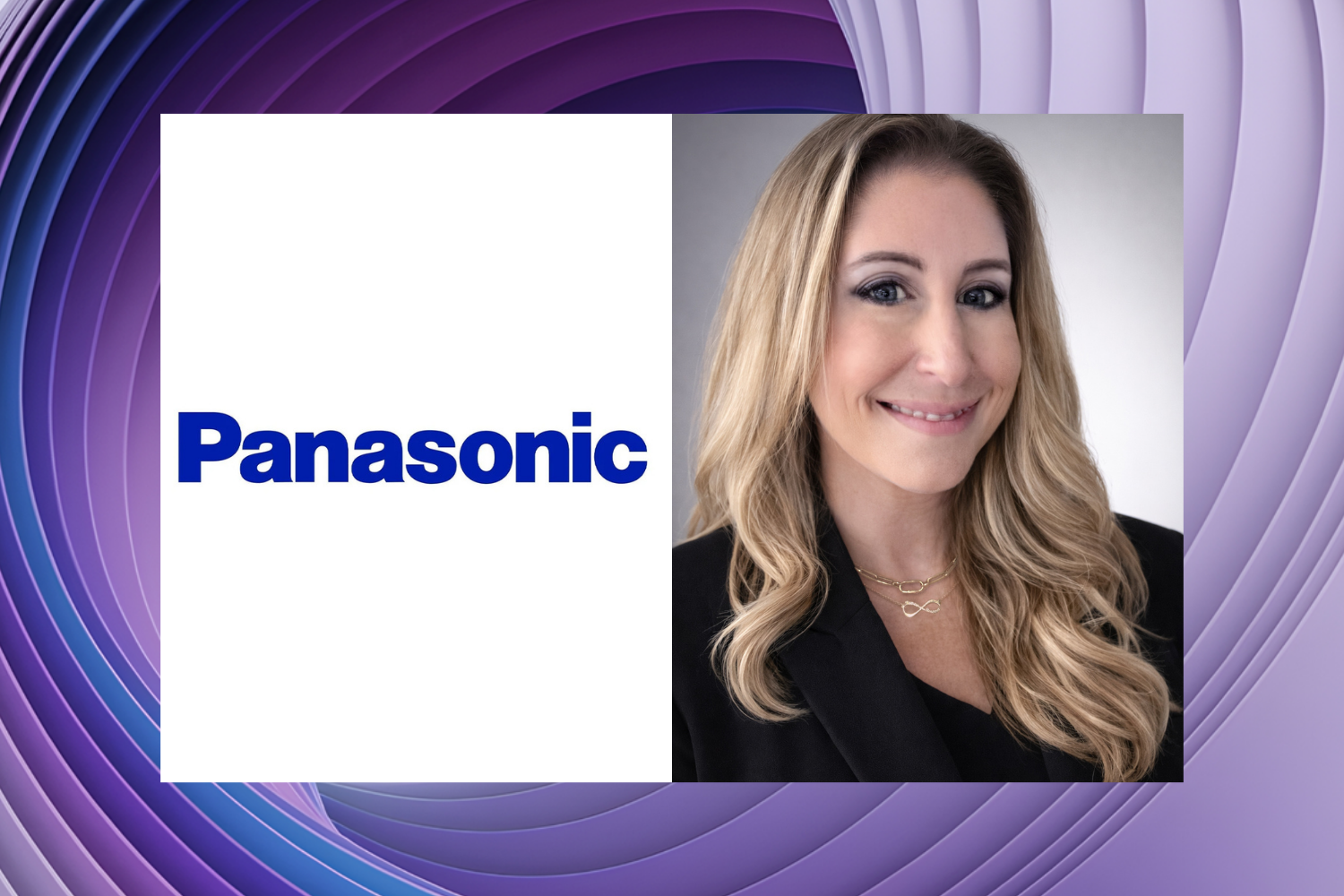
Most marketing leaders arrive at the top through strategy or performance. Michelle Esgar arrived through creativity — a background in art direction and creative production that, by her own account, most organizations bury rather than promote. The further you move from official creative functions, she’ll tell you, the more desperately creative thinking tends to be missing.
That observation carries a particular weight at Panasonic. As Director of Marketing and Experience for the company’s US consumer business, Esgar oversees not just brand and communications but the full customer journey. That includes content strategy, social, and post-purchase experience, a scope that reflects a deliberate choice to treat the marketing function as something closer to a flywheel than a funnel. It’s a distinction she draws plainly: the difference between being a manufacturer and being a brand.
The tension she operates inside is real. Consumer electronics represents less than four percent of Panasonic North America’s revenue, while remaining the dominant face of the brand for most American consumers. The parent organization’s center of gravity has moved toward B2B, toward infrastructure, toward EV batteries and supply chain. Esgar’s job is to build competitive share of voice, earn relevance with a generation that has fewer Panasonic products in their homes than their parents did, and make the case for upper-funnel investment inside a business that measures almost everything else in much shorter windows.
Aivanta spoke with Esgar about what it actually takes to run brand inside a company mid-transformation, why she’s challenging the industry’s appetite for marketing rules, and what she believes separates the highest-performing marketing talent from everyone else, now and in the AI era ahead.
You came up through creative direction before moving into brand strategy and marketing leadership, a path that’s different from the comms or demand-gen track a lot of people in your role took. How much does that origin still show up in how you think about the work today?
I originally intended to work in advertising – it seemed like the perfect outlet for creative problem solving. Moving through my career, however, I’ve found that creative problem solving is essential in nearly every area of professional work – and the farther you move from official creative functions, the more desperately it tends to be missing. From marketing managers all the way up through the C-suite, you will find tremendously intelligent, productive and effective leaders, but very few are true out-of-the-box thinkers. This can stagnate transformation and limit growth potential. The challenge is that many creatives are easily bored by non-creative roles. In such a rapidly changing business environment, I hope organizations will begin to redefine the roles at the top, identify and nurture creative problem solving, and design non-traditional paths to leadership that genuinely unlock the power of creativity where it is needed most.
Your title includes “Experience” alongside Marketing, which isn’t always the case. When you describe what the job actually is right now, not just the marketing function but the full scope of it, how do you explain it?
Beyond product marketing, my team includes two other areas; Brand Experience, inclusive of PR and Communications, Content Strategy, Social Media and Creative, and Customer Experience, inclusive of Customer Insights, User Experience and Post-Purchase Experience. I think the Post-Purchase piece is probably the most unique, but actually makes a lot of sense. For a long time, customer support lived independently within the organization (as it does in many organizations, especially manufacturers), which tended to create a siloed environment and a disconnect between pre-purchase and post-purchase experience. As we continue to grow our D2C business and connect directly to our customers, it’s critical that we think about the entire customer journey as one continuous flywheel, rather than a marketing funnel that ends at purchase. It’s a key differentiator between being a manufacturer and being a brand.
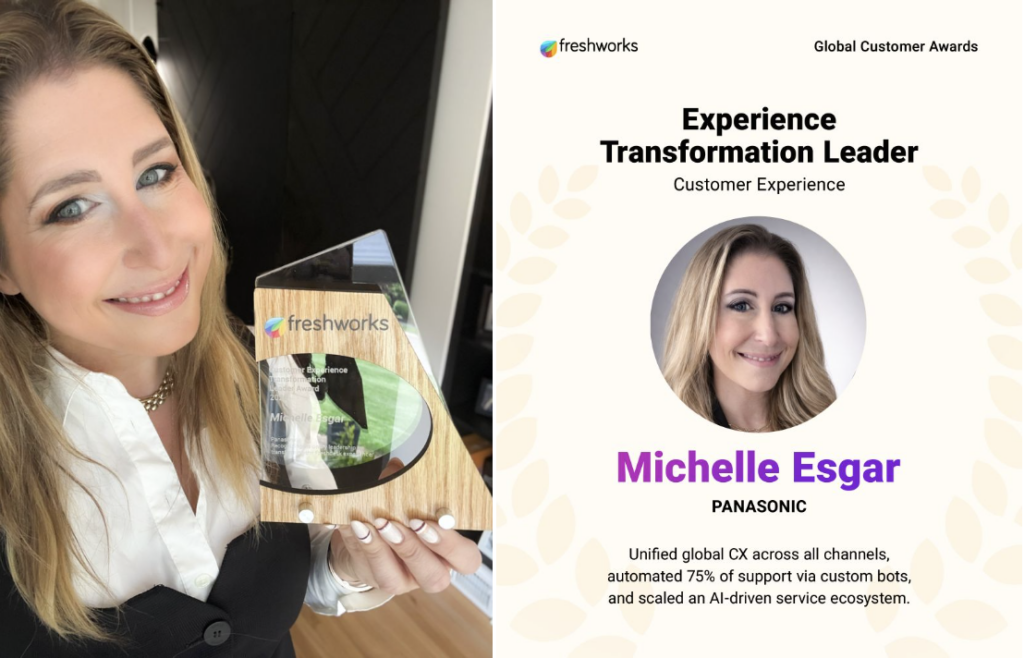
Photo courtesy of Michelle Esgar
Panasonic has an interesting brand positioning challenge in consumer electronics right now, as a heritage brand with a parent company that’s center of gravity has shifted substantially toward B2B. What’s the hardest thing to get right in your role given that context?
I think what’s interesting is that, while less than 4% of Panasonic North America’s revenue is driven by the consumer business, the vast majority of customers in the US still only associate Panasonic with consumer electronics. It makes sense – since most Americans are not professional B2B buyers – so we remain the predominant touchpoint for the brand. I think the challenge is in the resources available to the consumer business in the region. In the domestic Japanese market, consumer electronics is still the #1 source of revenue, so it is heavily supported by the organization. Since we are only a fraction of the business in the US, and B2B businesses have much narrower target markets, we often struggle with getting sufficient marketing investment to earn a competitive share of voice in our product categories.
There’s a constant pull between building long-term brand relevance (especially with younger consumers) and the near-term performance metrics the business must hit. How do you navigate that tradeoff in practice?
This is a near-constant battle. The good news is that we are getting better and better at quantifying the impact of upper funnel brand-building activity on lower-funnel performance – bridging that gap in impact measurement so we can properly balance our activity. Lower funnel efficiency is actually one of the primary KPI’s we look at to evaluate upper funnel performance.
What’s a decision you made in the last year or two that felt genuinely meaningful – a bet on the brand or the experience that required real judgment and where the right answer wasn’t obvious.
We made the decision last year to begin outsourcing creative. It’s a highly controversial move, one that many brands are hesitant to admit, and there are very clear pros and cons, especially having risen up through creative in the organization. What brands are currently facing, however, is an essentially unmanageable demand for content – that will continue to increase for the foreseeable future. We still need creative oversight in-house, to maintain alignment with our brand and business priorities, but as AI continues to advance, the output is increasingly meeting and even surpassing human capability, with the added benefit of speed and personalization at scale. It’s been a tough transition, both emotionally and tactically, but I still believe that it was the right decision for the long-term.
Where have you doubled down in terms of how you show up (channels, partnerships, etc.), and where have you pulled back? What drove those decisions?
We’ve been shifting a lot more of our attention back into social – particularly in utilizing social as a central touchpoint for our brand. Smaller brands have been working like this for ages, but for an enterprise manufacturer this wasn’t always natural. Who wants to follow their microwave brand in Instagram? But we’ve been spending more time unraveling the role that social needs to play in each one of our product categories and have been gradually building out connected ecosystems of activity that amplify trusted voices in market and create opportunities for genuinely valuable direct engagement with our customers. In terms of pulling back, we’ve been gradually reducing programmatic display – we’re finding that consistently the algorithms favor superficial wins, and end up spending out budgets in ways that have little actual impact on our brand or sales.
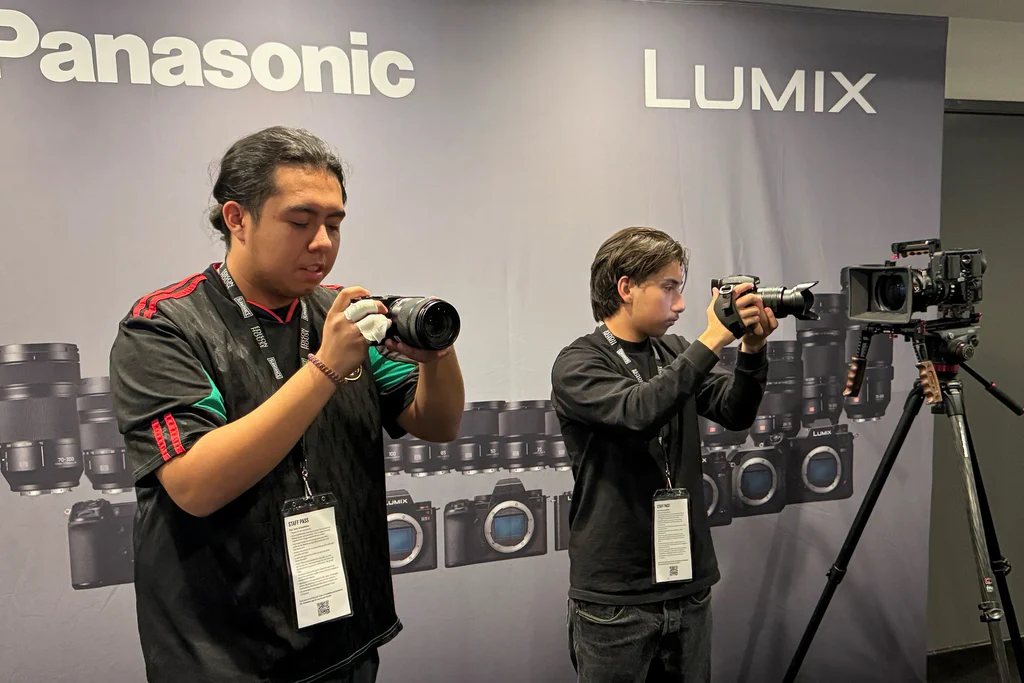
Photo courtesy of Panasonic North America
Given the conversation taking place about what AI means for marketing, where do you see AI showing up in your day-to-day work at Panasonic? Where do you think the reality is out of accord with the conversation?
The early conversations about AI are understandably tied to efficiency – we’re looking for AI to take over for all the annoying manual tasks that currently eat up our teams’ time. Or for quick wins in data analytics and optimization so that we can reduce risk and optimize our spend. And in both of those areas, AI still has a ways to go before it meets expectations. No ad management platform has reached a true maximum level of optimization, AI agents are still regularly making mistakes, and there are many creative tasks that take more time in prompts than would have been needed for actual execution. I have no doubt, however, that over the next couple of years we will see a profound improvement in performance across the board in these areas.
Where AI gets interesting, I think, is not so much in doing things we already do (but better of course), but in doing things that we don’t/can’t/never thought of doing. For all of human history, people have assumed that they are highly complex beings – that human emotion and thinking is extraordinarily complicated. But AI is quickly showing us that we are not so complicated after all. After just a handful of conversations with ChatGPT, it can tell you more about yourself than you were ever aware of – and that analysis is typically spot-on. Marketers have always had a bit more awareness of the predictability in human behavior than the general public – after all, we have been accurately grouping people into segments for years. But AI unlocks a level of insight on values and emotional resonance that far surpasses anything that we have had before, and at scale. I’m genuinely excited to see how this reshapes the marketing industry, as well as how it reshapes every other professional function. We are truly on the cusp of an entirely new world.
Looking ahead, what do you think will look genuinely different about this kind of role in a few years? Conversely, what do you think stays constant regardless of how much changes around it?
The “what” in what we do I believe is going to change entirely. Marketing strategy will be driven and executed by AI. Every role within the marketing organization will be redefined. And I don’t think anyone knows quite yet what those new roles will be. What I do expect to stay the same is the core capability typically associated with the highest performing talent in this field – a near dead even balance between analytical capability and emotional empathy. If you add in creative problem solving ability, you essentially hit the holy grail of marketing talent. This combination is typically extremely difficult to recruit, and unfortunately I expect will become more and more critical to success as AI advances. The exciting part is that if you can find them, armed with future AI, their potential should be almost limitless.
What’s a piece of conventional wisdom in marketing right now that you think deserves more scrutiny, i.e. something the industry keeps saying that you’re unsure about?
I’d like to challenge that there are fundamental rules of marketing at all. Our industry really loves to hear ourselves talk. We have a tendency to hold and attend events where marketers are “teaching” other marketers about the “right” strategies, the “right” methodology, the “right” priorities. But marketing is inherently not one-size-fits-all. Wendy’s hit gold with a snarky Twitter account that directly insults their customers for fun. Ryan Air threw a talking mouth on a plane in TikTok and violated every standard of how a brand should “show up”. Vaseline leaned in on creators posting off-label product use. Burger King’s CEO publicly called out every single thing wrong about their customer experience. All of these violate traditional “best practice” and would undoubtedly backfire for most other brands that tried them. But they were effective because they perfectly fit that brand and that audience at that time. I love coming together as an industry – I’d just like to see us moving away from rules and focus more on storytelling – share the successes, the failures and the anecdotes, but with the goal of inspiration not education.
What’s the advice you find yourself giving most often to marketing leaders who are earlier in their careers?
An area that comes up frequently is not so much around marketing strategy or execution, but internal communication. Most marketers find themselves frequently having to pitch or report on marketing strategy with non-marketers within their organizations, which commonly results in conflict and frustration. We have all been exposed to too many people who believe marketing is about designing pretty ads and going to fun events, and that opinion has driven a defensiveness in the industry where young leaders feel that they need to prove themselves as analytical thinkers. The most classic example is in presentations with high level executives. If a marketing leader presents to an executive and is questioned, they have the tendency to launch into more and more detail – often surfacing extensive data to validate the point that they are trying to make. The reality, however, is that what most executives are looking for is less detail, not more. The first presentation was already too deep, or too jargon-laiden, and they’re looking for a very simple, high-level understanding of the bottom line. The resolution is a matter of shifting perspective; walk into your presentations as a trusted expert who is there to help educate others who don’t share your same level of expertise. This is where you get to be a teacher – not with other marketers, but with everyone else.
About the Aivanta CMO Series
The Aivanta CMO Series is an editorial platform featuring in-depth conversations with senior marketing leaders about how the CMO role is evolving. Each piece is developed to surface real decisions, genuine trade-offs, and the kind of operating insight that rarely gets told at the right depth in trade coverage. New interviews are published on a rolling basis at aivanta.io/cmo-series.