Every toy company markets to kids. Very few market to the memory of being a kid. Toys”R”Us does both simultaneously, and the gap between those two audiences is wider than one might assume. Millennials who grew up sprinting through the aisles carry a specific emotional imprint the brand didn’t have to earn. Kids today have no such imprint. The brand has to build it from scratch, in a whole new retail environment, under a banner that almost disappeared after bankruptcy.
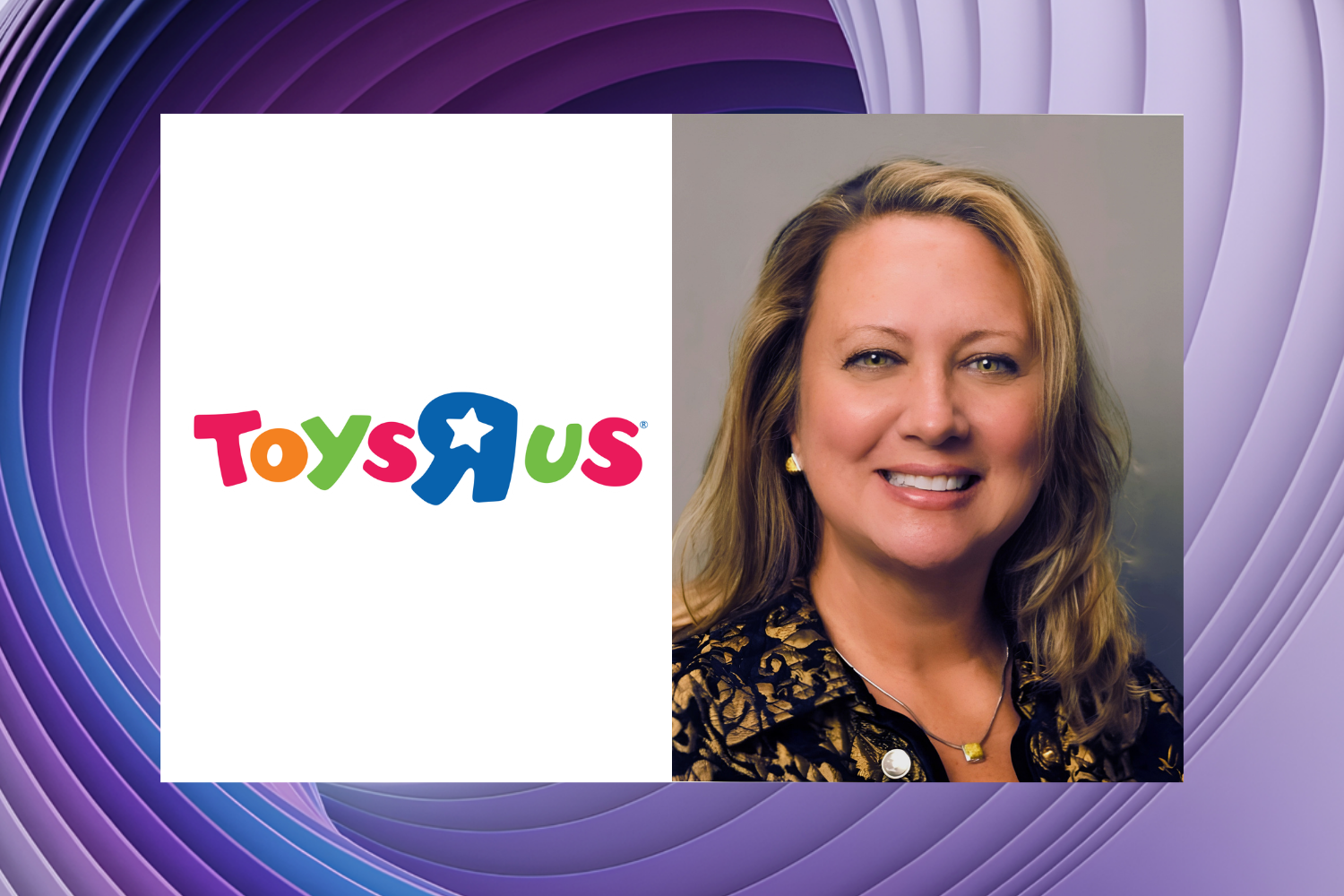
Kim Miller Olko has done this kind of work before, and done it well. A four-time Emmy Award winner who spent more than a decade at Martha Stewart Living Omnimedia, she helped transform one of the most complicated brands in modern media and executive produced the show that put Martha and Snoop Dogg in a kitchen together. She joined Toys”R”Us in 2021, carrying two titles: Global CMO and President of the newly established Toys”R”Us Studios. The first job is about selling toys. The second is about turning Geoffrey the Giraffe into a global entertainment IP.
In this conversation, Miller Olko talks about what brand resurrection requires, how she holds two different audiences at once, and what she learned from being the first brand to release a film made with OpenAI’s Sora.
You joined Toys”R”Us in 2021 when the brand had been through bankruptcy, had closed every U.S. store, and was starting over inside Macy’s. When you describe what you signed up to do, how do you explain it?
To bring back a legendary brand. I had been an integral part of modernizing the Martha Stewart brand, and this was another incredible brand that needed to be exciting to present-day consumers. I live by the phrase “same magic, new method.” This honors all of the amazing emotional feeling Toys”R”Us has always incited in every Toys”R”Us kid from 2 to 92 years old, but for the 2020s. This included revamping the “I Don’t Wanna Grow Up” song to an R&B rhythm, Geoffrey becoming a TikTok star with 1.2M followers, and Geoffrey making guest appearances at shows like Blue Man Group and throwing out the first pitch at a Mets game.
@toysrus on TikTok
Toys”R”Us is your second major brand rebuild after Martha Stewart. What does brand resurrection require that differentiates it from ordinary brand management?
It requires understanding the true soul of the brand, and never trying to move away from that core. It’s also about not losing the current lifelong fan while broadening out so that they remain engaged, but now the brand is disrupting in the current playing field and attracting fans who may not have paid attention to it before. It requires being humble to the legacy. Not thinking you can come in and strong-arm it into your vision, but respecting it as you expand it.
You’re marketing to two audiences who relate to Toys”R”Us in completely different ways. Millennials and parents carry genuine emotional memory of the brand. Kids today have none of it. How do you hold both of those briefs at once without losing either one?
It’s like being at a social event with different age ranges. You talk to people personally and relate to them for who they are. Sometimes the conversations are very different. But many times both groups connect around the same things, like posing for pictures on the Geoffrey on the Bench statues in each store, or any real-life Geoffrey appearance anywhere. At every age, he gets hugged and photographed. In stores, we have play tables and open boxes so kids can try out toys right then and there. And for adults, we provide gift guides and a “Now Playing” section, so all the great movies and shows that kids and adults are watching are featured alongside the toys that support them.
You’re carrying two jobs simultaneously: Global CMO and President of Toys”R”Us Studios. What does it mean to run a studio out of a marketing function, and where does the logic of those two roles pull against each other?
For me, it’s very clear. The marketing arm supports our partners, who currently represent 1,672 stores in 37 countries, and positions Toys”R”Us as the retail authority on toys, showcasing that in every way we sell. Toys”R”Us Studios is a content company. We partner with creators, studios, and distributors on content that resonates with the Toys”R”Us DNA: play as an integral part of childhood development, an expression of joy that benefits mental health at every age, and a genuine advocate for togetherness through the joy of play.
At Cannes Lions in 2024, Toys”R”Us became the first brand to release a film made with OpenAI’s Sora. Two years out from that moment, how do you reflect on it? What do you know now that you didn’t know going in?
That it was an incredibly smart move to be on the AI train as it left the station. Just days later, many brands adopted AI, Motorola among them, but only we went viral globally. I also saw immediately the limits of AI in visual storytelling, and I know that humans can’t be replaced in much of it.
You’ve described Geoffrey as a cultural character and an IP asset. What’s the material difference between treating him as IP rather than as a mascot?
He is the personified brand ambassador of Toys”R”Us, and so much more than a mascot. A mascot is a human in a costume. I see Geoffrey as a celebrity with no limitations. And frankly, we’ve only just begun to develop him, his relationships, and his world. Much more to come.
Toys”R”Us on YouTube
Roofman is an R-rated fugitive thriller set in a Toys”R”Us. At launch it had no affiliation with the brand, and not every CMO would move to close that distance. What made you lean into it rather than away from it, and what did the social campaign to get Paramount’s attention tell you about how you have to operate as a challenger brand in the entertainment space?
A big part of this film, based on a true story, centered on the fugitive hiding out in a Toys”R”Us for months. So the brand was all over the movie. The store was the hideout, not the criminal, and as a result some of the more fun aspects of the store were naturally highlighted. So why not jump in and get the halo effect of a theatrically released film that sparks nostalgia for the brand organically? CMOs have to safely jump on non-traditional opportunities to put the brand in front of fans and customers in unexpected ways. Today’s consumer wants that. They don’t want a heavy commercial sell.
As for the social campaign to get Paramount’s attention: it was a huge win for them. We were promoting their movie before they were, in clever, attention-getting ways. It culminated in an in-store appearance and content with Channing Tatum. A no-cost cross-promotion as the end goal. The fact that it actually happened took perseverance and swift trust-building that it could be a genuine win for both sides.
@toysrus on TikTok
Where is AI genuinely showing up in how your team operates day to day, separate from the Sora film? And where does the reality still lag behind the public discourse?
Our parent company WHP Global embraces AI technology to the point of maintaining an internal AI task force. On my team specifically, AI handles more routine tasks so our people can maximize their creative output. The public responds well when it’s used that way, because they’re simply enjoying the content. Our global partners are actively requesting content where animations and elements are made with AI, because it’s a genuine trend in content creation in their markets.
Looking a few years ahead, the toy category, kids’ entertainment, and retail are all shifting simultaneously. What do you think will look genuinely different about this work in five years, and what do you think stays the same regardless of how much changes?
There will be even more ways to reach the customer where they are and eliminate friction from any transaction. I think the hard sell won’t come back, and authentic peer recommendations from people who aren’t paid to give them will remain the most valued form of trust-building. Experiences are on the rise, and the combination of retail, experience, and entertainment will continue to merge and become a significant part of how people shop day to day.
What’s the advice you find yourself giving most to marketing leaders who are earlier in their careers? The thing you wish someone had said to you.
Know the rules, meaning what everyone else is doing, and then ask yourself where you can safely break out of them to stand out with confidence. Test, test, test new things. And always be listening to your customer. Through the circular communication of social media and beyond, we don’t have to guess what they want. They tell us clearly.