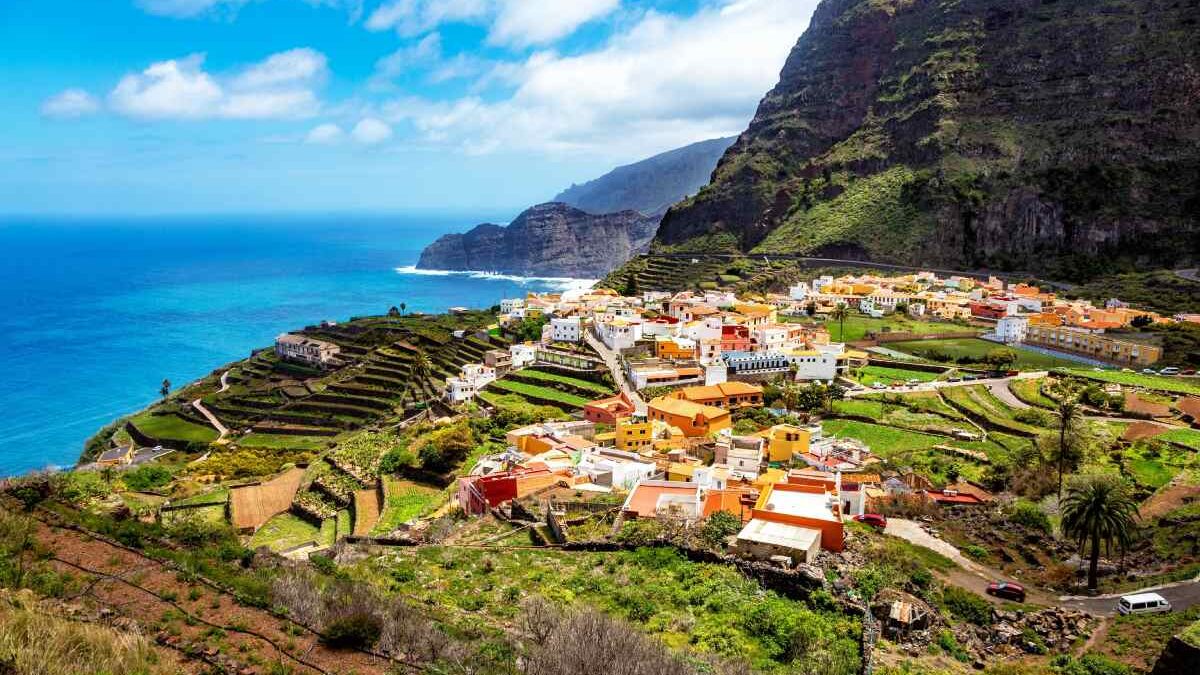
In April 2024, tens of thousands of people marched through the streets of the Canary Islands under a single banner: Canarias tiene un límite. The Canary Islands have a limit. Tourism had delivered record arrivals, record expenditure, and a GDP contribution north of 35 percent. It had also delivered overcrowding, a housing crisis, and a community that was no longer willing to absorb the cost quietly. For most destination marketers, the instinct in that moment would be to go quiet, stay positive, and wait for the news cycle to move on.
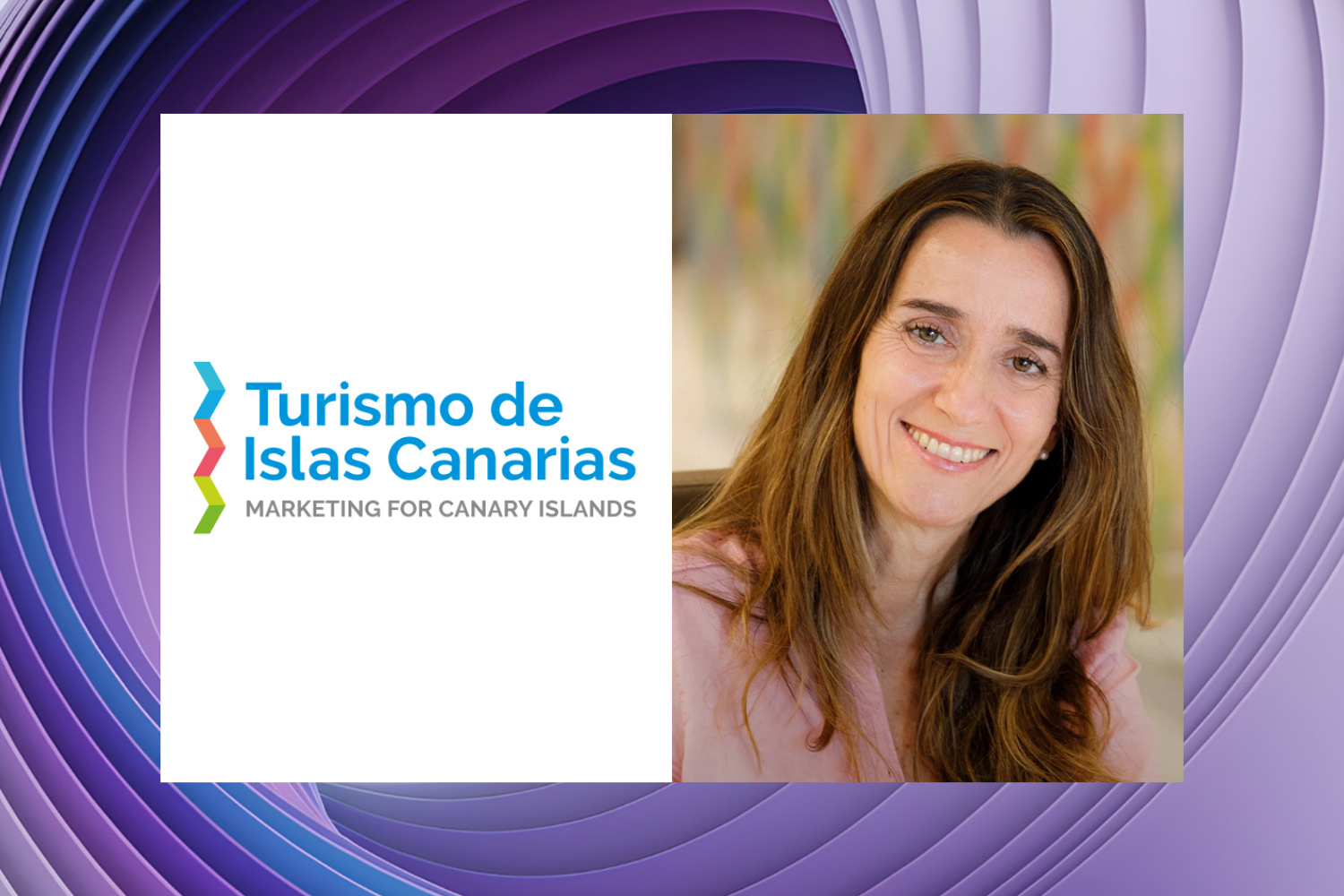
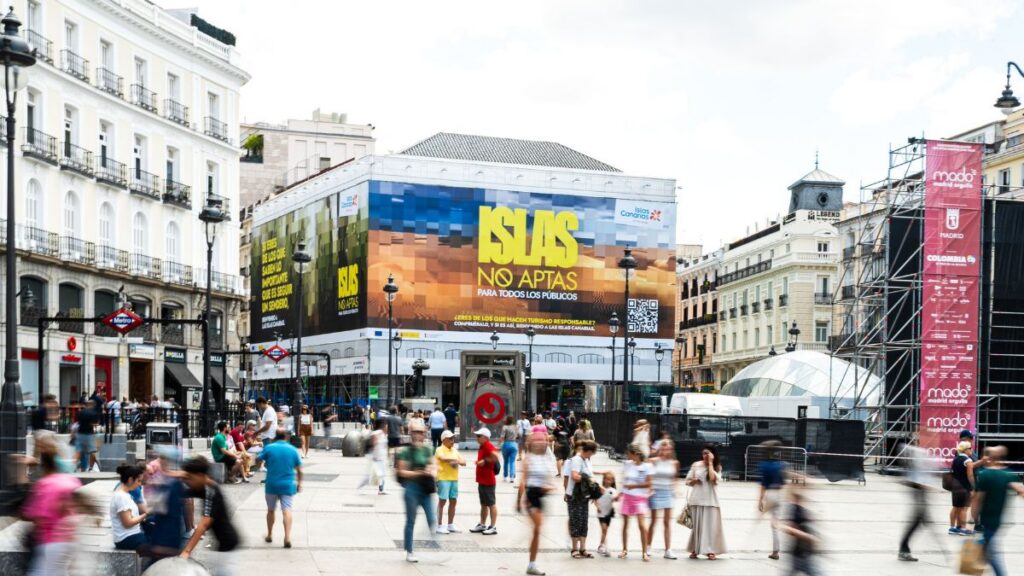
Elena González did the opposite. As Marketing Director of Turismo de Islas Canarias, a role she has held since 2005, she launched a campaign whose central message she then placed on a billboard in Madrid’s most iconic square: Not suitable for all audiences. Welcome, responsible travellers.
That decision is the clearest illustration of how González thinks about her work. Over twenty years leading one of Europe’s most awarded destination marketing programs, her definition of the job has shifted in ways that go well beyond new channels and new tools. Marketing a place, she argues, is no longer about bringing more people in. It is about being honest about the relationship you want to build between visitors and the destination, and having the courage to say so publicly, even when the industry advises otherwise.
In this conversation, González talks through the structural tension at the heart of destination marketing today, how she evaluates genuinely unconventional creative bets, where AI is actually showing up in her team’s work, and why she believes the brands that endure are the ones that don’t avoid difficult conversations.
You studied law, trained at the UN in Geneva, and ended up spending your entire career in tourism marketing. What’s the path that led you to this kind of role?
It was almost by chance, although, looking back, I think part of me always knew this was the direction I was meant to take.
Early in my career, I had three different opportunities come to me at the same time and had to choose just one. I accepted a position at Turespaña, Spain’s national tourism organization, where I was initially hired to work on legal matters, particularly those related to European law. That was my first introduction to the tourism industry.
Later, I applied for a position in the Tenerife Island Council’s tourism promotion department. To be completely honest, I expected to stay for a year before returning to a legal career. Instead, I discovered an industry that fascinated me. After my first year, I was offered the opportunity to lead the department, and from that moment on, there was no turning back.
What captivated me was that tourism sits at the intersection of economics, culture, people, creativity and international relations. It is an industry that is constantly evolving, and marketing within it evolves even faster. I began studying marketing while working, and I’ve never stopped learning since. That curiosity, the desire to understand people better, embrace new ideas and keep challenging myself, is probably the common thread throughout my career.
In many ways, I didn’t leave law behind. It taught me analytical thinking, how to build arguments and how to make decisions based on evidence. Marketing added creativity, emotion and storytelling. That combination has shaped the way I approach my work today.
You’ve been in this role for over twenty years. When you describe what the Marketing Director job actually is right now, not the textbook version. How do you explain it?
It’s funny because my own children still aren’t entirely sure what I do for a living. They often joke that what I do “isn’t really a profession,” probably because they only see the visible part of the job: the events, the travel, the meetings and the creative side.
But that’s only the tip of the iceberg. Beneath the surface, the role is about strategy, constant adaptation and making decisions in an environment that changes every day. Consumer expectations evolve incredibly fast. Technology reshapes the way people discover destinations. New competitors emerge, social trends shift, and global events can change travel behavior overnight. My job is to anticipate those changes rather than simply react to them.
At the same time, destination marketing has become much more complex. It’s no longer about persuading as many people as possible to visit. It’s about attracting the right visitors, creating long-term value for the destination, balancing economic growth with sustainability, and ensuring tourism continues to improve the lives of the people who live there.
I often say that we sell happiness. A holiday is one of the most anticipated moments in people’s lives. Every trip begins as a dream long before it becomes a booking. Our responsibility is to make sure that when people choose the Canary Islands, the experience lives up to that dream. That’s what makes this job both incredibly demanding and deeply rewarding.
How has the scope of what you own shifted over the past few years? What’s moved toward you, and what’s moved away?
Over the last few years, my role has expanded far beyond marketing in the traditional sense. Today, marketing isn’t just responsible for attracting visitors; it’s expected to help shape the future of the destination.
We work much more closely with areas such as sustainability, connectivity, culture, technology and even public policy, because every decision influences how the destination is perceived and experienced.
At the same time, some things have become less important. Success can no longer be measured simply by the number of visitors or the reach of a campaign. Those metrics still matter, but they’re no longer enough. We now focus much more on the value tourism creates—for visitors, for local communities and for the destination over the long term.
In many ways, the role has shifted from promoting a destination to stewarding a brand. That requires a much broader perspective and much closer collaboration across the entire organization.
What’s the hardest thing to get right in your role right now?
The hardest part of my job today is balancing the expectations of the people who visit us with the needs and aspirations of the people who live here.
For many years, tourism, and marketing in particular, was optimized for growth: more arrivals, more visibility, more impact. Today, the challenge is much more nuanced. We have to create economic, social and environmental value at the same time, without losing competitiveness.
That means asking ourselves difficult questions. What kind of tourism are we encouraging? What are we putting under pressure? What kind of experiences are we creating, and who ultimately benefits from them?
Tourism doesn’t just shape landscapes; it shapes communities. It influences housing, employment, culture, identity and quality of life. As destination marketers, we have a responsibility that goes beyond attracting visitors. We must help ensure that tourism contributes to building a more prosperous, balanced and resilient society.
For me, that’s the real challenge: not simply bringing more people to the Canary Islands, but making tourism a force for improving the lives of everyone who calls them home.
You’ve described your approach as “from data to story.” In practice, how do you hold those two things together?
Data and storytelling are often presented as opposites, but I see them as complementary. Data tells us what is happening; stories help us understand why it matters.
Today we have access to an extraordinary amount of information about travellers—their behaviors, preferences, motivations and expectations. But having more data doesn’t automatically lead to better decisions. Sometimes what we need isn’t more data, but better questions.
That’s where storytelling comes in. Data helps us identify patterns, but stories give those patterns meaning. They allow us to connect with people on a human level and build relationships that last beyond a single campaign.
For me, the goal isn’t to chase every trend or reinvent the message every season. It’s to build a consistent narrative rooted in who we really are: our culture, our landscapes, our identity and our values. When data informs that narrative, rather than replacing it, marketing becomes much more relevant, authentic and enduring.
How do you think about the difference between building long-term brand equity for a destination versus driving near-term arrivals? What happens when those two goals pull in different directions?
One of the biggest differences between leading a public-sector brand and a commercial one is that success is measured in more than one way.
Of course, we want to generate demand and support the tourism economy in the short term. But our real responsibility is to protect and strengthen the long-term value of the Canary Islands brand. Unlike many private brands, we also operate within an institutional environment, where priorities, stakeholders and political cycles can naturally influence the agenda. That makes consistency both more difficult and more important.
For me, short-term activation should never come at the expense of long-term brand equity. Campaigns come and go, but a destination’s reputation is built over decades. Every action should reinforce the same strategic positioning rather than chasing immediate results.
I’m proud that we’ve been able to maintain that discipline. Our marketing strategy received international recognition back in 2017, and we’ve remained remarkably consistent ever since. More than sixty international awards over the following years are not simply a measure of creative excellence; they reflect the strength of a long-term strategy that has remained coherent despite an ever-changing environment.
Brands earn trust through consistency. That’s especially true for places, because destinations are remembered long after a campaign has ended.
Can you walk me through a decision you made in the last year or two that felt meaningful; something that required real judgment and where the path wasn’t obvious?
One decision that stands out took place during a period of intense public debate about tourism in the Canary Islands. Tourism had become the focus of growing social frustration, with many people linking it to overcrowding, housing pressures, traffic and environmental concerns.
At that moment, continuing to promote the destination wasn’t a straightforward decision. Every piece of communication suddenly had two audiences: the potential visitor and the local resident. We realised we couldn’t speak to one without considering the other.
We decided to take a different approach. Instead of simply encouraging people to visit, we launched a campaign built around a simple but powerful message: “Not suitable for all audiences. Welcome, responsible travellers.” We even displayed it on a giant billboard in Madrid’s most iconic square.
It wasn’t an easy decision. Some tourism businesses worried the message might discourage visitors and advised us to take a safer route. But we believed our responsibility wasn’t just to drive demand; it was to be honest about the kind of relationship we wanted to build between visitors and the destination.
The campaign wasn’t about making tourists feel guilty or less welcome. Quite the opposite. It was an invitation to those who wanted to enjoy the Canary Islands while respecting its extraordinary natural environment and the communities that call the islands home.
For me, it reinforced an important lesson: the strongest brands don’t avoid difficult conversations. They express their values clearly, even when that requires courage.
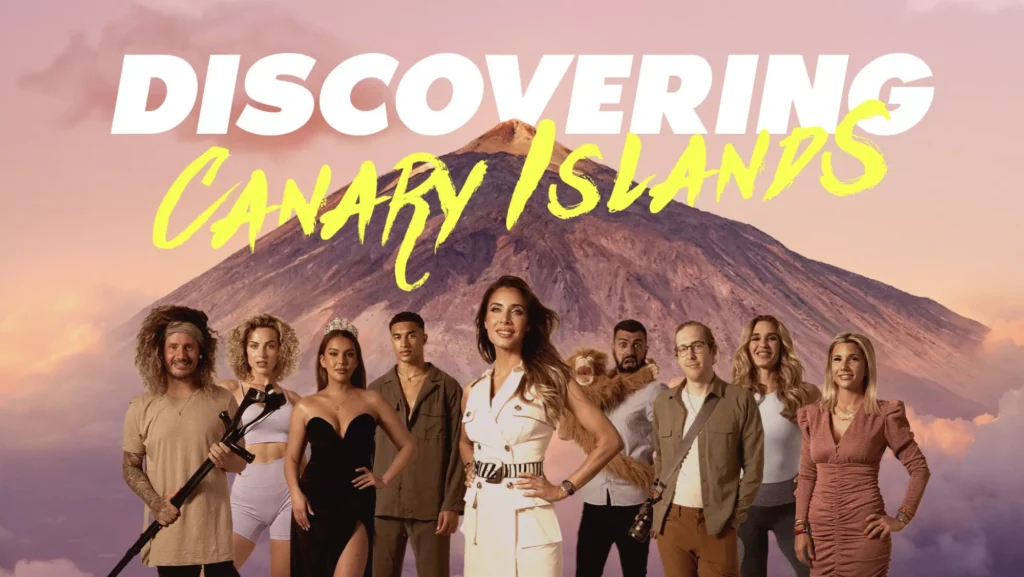
Your team has made some genuinely unconventional bets, from a reality show to a feature length film to a Roblox experience. How do you think about evaluating those kinds of ideas before you commit? What does it take for something unusual to actually get made?
Innovation is never the objective. Relevance is.
If you keep doing what everyone else is doing, you’ll probably achieve the same results. But today’s audiences are overwhelmed by content and increasingly resistant to traditional advertising. So instead of asking, “How do we interrupt people?” we ask, “How do we become something they genuinely want to spend time with?”
That’s why we’ve explored formats like a reality show, a fiction podcast, a bestseller, a feature film and a Roblox experience. Not because they’re unconventional, but because they’re places where our audiences already are. Rather than expecting people to come to us, we try to meet them where they feel comfortable and engaged.
Before committing to any idea, we ask ourselves three questions. Is it true to our brand? Does it create genuine value for the audience rather than simply attracting attention? And will it strengthen the long-term narrative of the Canary Islands, rather than becoming a one-off stunt?
Being unconventional always involves a degree of risk. But I believe the greatest risk today is inertia. As long as you stay true to your values and your purpose, innovation becomes a way of building trust, not losing it.
There’s a lot of conversation about AI transforming marketing. Where is it actually showing up in your work, and where do you think the reality still lags the conversation?
AI has been part of marketing for much longer than most people realise. Machine learning, programmatic advertising, lookalike audiences and predictive analytics have been helping marketers make better decisions for years.
What’s different now is that AI isn’t just improving individual tools—it’s transforming the entire creative process. I don’t think it’s changing what we do as much as how we do it, and certainly the speed at which we can do it.
In our work, it’s making a real difference in three areas: rapidly prototyping creative ideas before investing in production, personalising content for different markets at scale, and analysing traveller behaviour in real time to better understand what people truly value.
But perhaps the biggest lesson is this: the easier it becomes to create content, the more important judgment becomes. AI can give us speed and efficiency, but it can’t define a brand’s purpose or make strategic choices. That’s still our job.
In the end, AI is an extraordinary co-pilot—but it shouldn’t be the one deciding where we’re going.
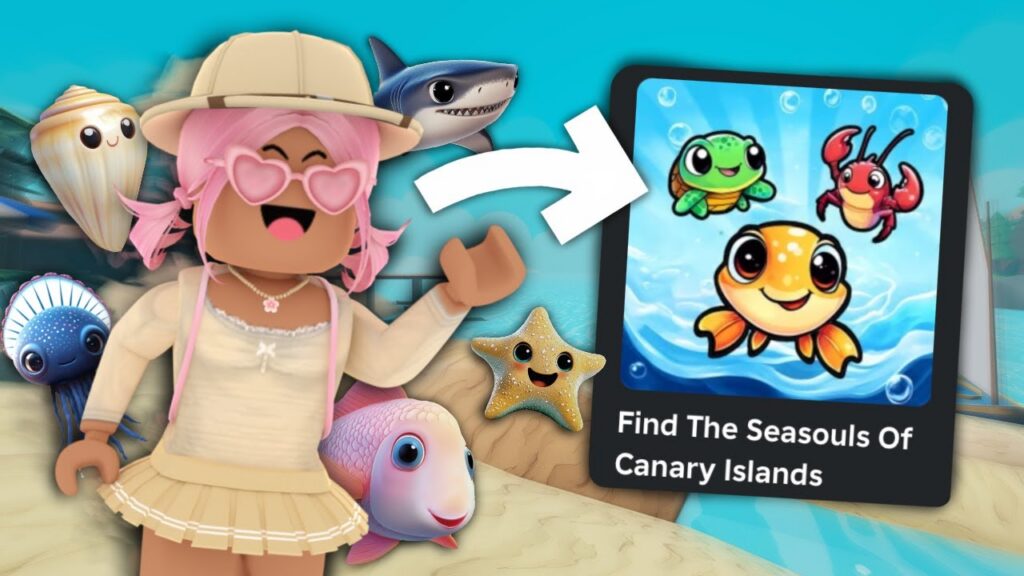
You launched Find the Seasouls on Roblox to reach Gen Alpha and positioned it explicitly as building the tourist of the future. How do you think about building brand relationships with people who won’t be making travel decisions for another decade? And what does AI’s role look like in that kind of long-cycle thinking?
One of the greatest privileges for a brand is having the time to build a relationship slowly, without the pressure of an immediate purchase. When you’re talking to people who won’t be making travel decisions for another ten years, you don’t need to persuade them to book; you need to help them understand who you are.
That creates a much more genuine relationship. The brand becomes a companion rather than a salesperson. At the same time, it gives us an enormous responsibility, because marketing doesn’t just reflect society; it also helps shape it. That’s why Find the Seasouls was designed with an educational dimension, introducing younger audiences to the Canary Islands’ biodiversity, culture and traditions through play.
AI will make those relationships even more personal. It will help us adapt experiences to different interests and learning styles, making interactions more relevant. But the purpose remains the same. Technology may personalise the journey, but it’s our values that give people a reason to care in the first place.
Looking ahead, what do you think will look genuinely different about destination marketing in five years, and what do you think stays the same regardless of how much changes around it?
Destination marketing will undoubtedly look very different in five years, because travellers themselves will be different. As consumer behaviour evolves, marketing has to evolve with it, or risk becoming irrelevant.
The changes will be both technological and cultural. AI is already transforming how people search, discover and consume information, which means brands will need to rethink their entire digital presence. Being visible will no longer depend only on search engines or social media, but on how well brands adapt to new AI-driven ways of finding and interpreting information.
At the same time, the content itself will also have to evolve. Communication will become faster, more personalised and more conversational. But speed alone won’t be enough. The stories that endure will be those that offer meaning and reflect something authentic.
Ironically, I believe that the more technology shapes our lives, the more we will value what technology cannot replace: human connection, local culture, genuine experiences and a sense of belonging. That’s why I think the future of destination marketing will be even more deeply rooted in authenticity than it is today.
What’s the advice you find yourself giving most often to marketing leaders who are earlier in their careers?
I’m always cautious about giving advice. Every career is different, and what works for one person may not work for another. What I can share is something I’ve learned over the years, not just through work, but through life.
Be honest. Be authentic.
Take the time to understand your own values before trying to define your brand’s. Then look for the place where your brand can genuinely improve someone’s life. If you find that, your work will have meaning beyond selling a product or increasing a metric.
Marketing is ultimately about people. Technology will change. Platforms will change. AI will change almost everything about how we work. But trust has always been earned in the same way: through honesty, consistency and authenticity.
If you never lose sight of that, you’ll make better decisions: for your brand, your team and yourself.