By Jordan P. Kelley May 26, 2026
Legacy brands don’t have an awareness problem. They have a staying-interesting problem. Consumers already know who they are. The harder work is earning a place in culture continuously, not just when there’s a campaign to launch or a product to push. For a nearly 100-year-old farmer cooperative, that pressure is constant.
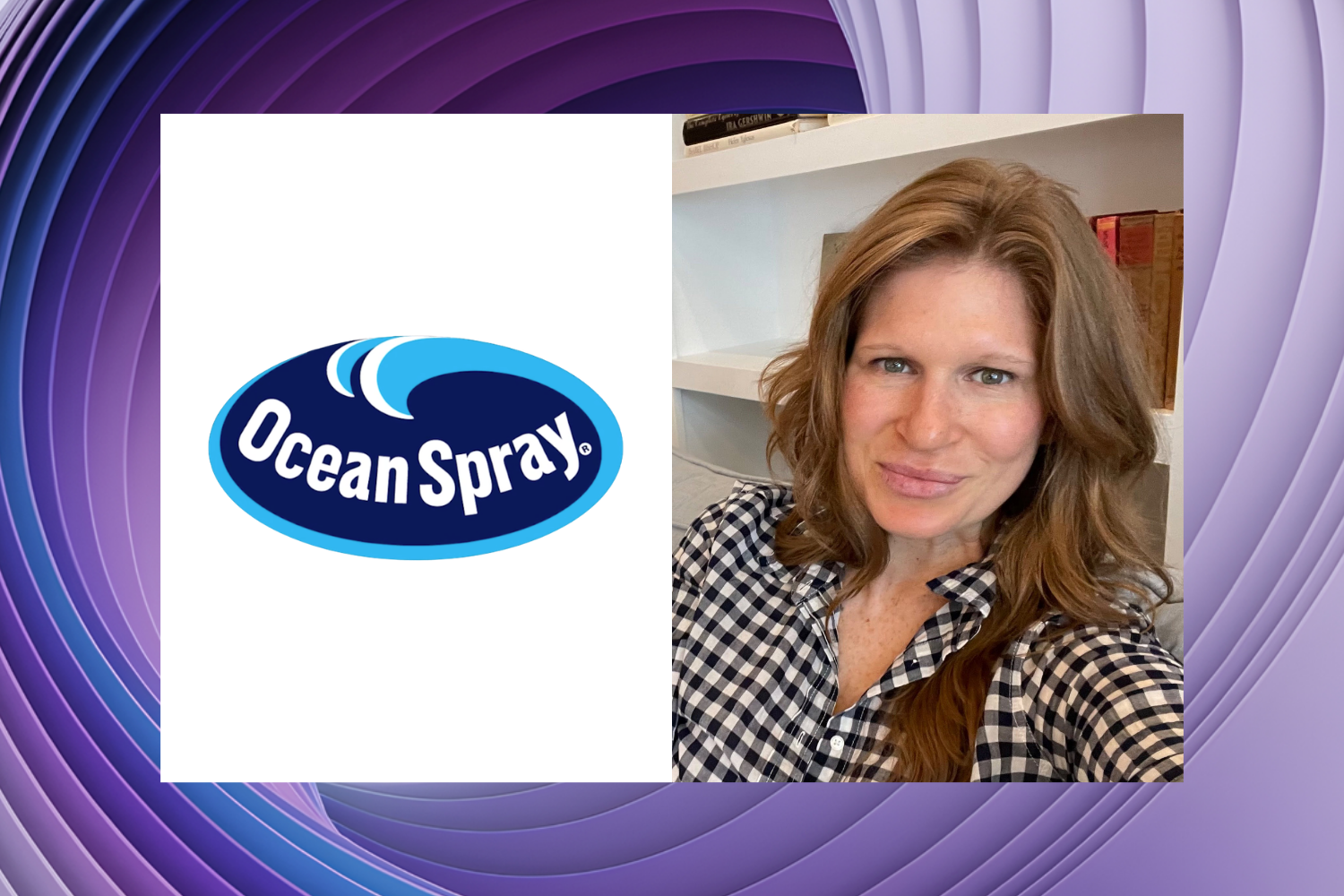
Eliza Sadler came to Ocean Spray from the strategy consulting world, a background that tends to produce brand thinkers who are more comfortable with frameworks than with the messiness of creative conviction. What’s notable about how she talks about her work is that she’s largely left the consulting instincts behind. At Ocean Spray, she leads a team she describes as brand strategy ninjas, agency whisperers, and maverick storytellers, running a creative ecosystem across multiple agency partners while keeping the brand coherent across channels that increasingly demand their own native logic.
That tension sits at the center of this conversation: between big campaign thinking and always-on presence, between the brand’s grower-owned soul and its need to stay current, between what AI can accelerate and where human instinct stays essential. Aivanta caught up with Sadler to talk about managing creative coherence across a multi-agency ecosystem, why relevance is built through consistency rather than moments, and what a century-old cooperative has to teach marketers about authenticity that can’t be manufactured.
You’ve been at Ocean Spray for a few years now, across two different roles, both deeply brand. When you describe what the job of ‘brand elevation’ actually is, not the job description version, how do you explain it?
Brand elevation is an internal team of brand strategy ninjas, creatives, agency whisperers, and maverick storytellers unified by the shared goal of elevating how our brand shows up in the world. We touch all things marketing with subject matter experts across design, media, martech, campaign development, PR, partnerships, and social. We partner closely with our internal marketing teams and external creative partners to push teams to unlock culturally relevant, brand-building opportunities across the entire consumer journey.
What’s the hardest thing to get right in your role right now, and what are you doing about it?
Staying relevant when the ground keeps moving beneath us. New brands are popping up every day. Legacy players are rewriting the rules. And consumers aren’t getting information the same way they were even a year ago. This means that in my role, complacency is the enemy.
The challenge isn’t just breaking through, it’s staying connected. That is why we’re embracing shorter-form storytelling, creating social-first/platform-native content, and leveraging new tools and technologies to meet consumers where they are.
As a legacy brand, we have to balance consistency with reinvention. We need to show up with a clear point of view while continuously evolving how we tell stories, earn attention, and stay part of the conversation.
I have to stay curious, open-minded, and a little fearless at times—willing to let go of what’s familiar, break old habits, and embrace new ways of thinking, creating, and growing.
You’ve talked publicly about the consumer decision journey as a ‘chunky curve’: availability, price, quality, then brand as the long tail. Given that framing, how do you make the internal case for investing in the brand layer when there’s always something more immediately measurable to fund instead?
Every brand is balancing what works now versus what builds value later. The short-term stuff is tempting because it shows up quickly and you can see results. But relevance doesn’t show up on a dashboard overnight, and you can’t just ask people to “trust you” on that anymore.
For us, the shift has been getting clear on the goal and redefining what success looks like in the moment. If we want conversion, let’s invest in conversion. If we want cultural relevance, we need to invest in the things that earn attention, participation, and connection—not just clicks. That’s the constant push and pull we’re having.
The good news is people know Ocean Spray. We’re not fighting for awareness. We’re fighting to stay interesting. That means showing up where people are actually spending time, creating things worth talking about, and earning our place in culture. It’s not always about pushing products, but about earning trust, brand love, and engagement. I believe brand and performance aren’t competing priorities. Strong brands make performance work harder.
You’ve worked with multiple creative agencies across the platform: Stone on identity, Orchard, Just Add Cran, Piggyback on Cranpus. How do you manage a creative ecosystem like that without losing coherence? What keeps it feeling like one brand?
Managing multiple agencies isn’t about making everyone think the same—it’s about giving everyone the same north star. Every partner brings a different perspective, and that’s a good thing. What keeps it all together is a clear understanding of who we are, what we stand for, and how Ocean Spray shows up in the world.
We don’t believe in one rigid message or forcing everything into the same box. We focus on the things that make us unmistakably us—our voice, our visual cues, our humor, our attitude—and use those as guardrails, not handcuffs.
And in today’s media landscape, cutdowns are no more. You can’t just make one campaign, chop it into a hundred pieces and expect people to get it or want to engage with it. People experience brands differently on every platform. The work has to feel native to the channel and natural to the audience. That’s the challenge—and the fun part. Consistency today isn’t about everything looking the same. It’s about making sure that wherever people find us, it feels undeniably Ocean Spray.
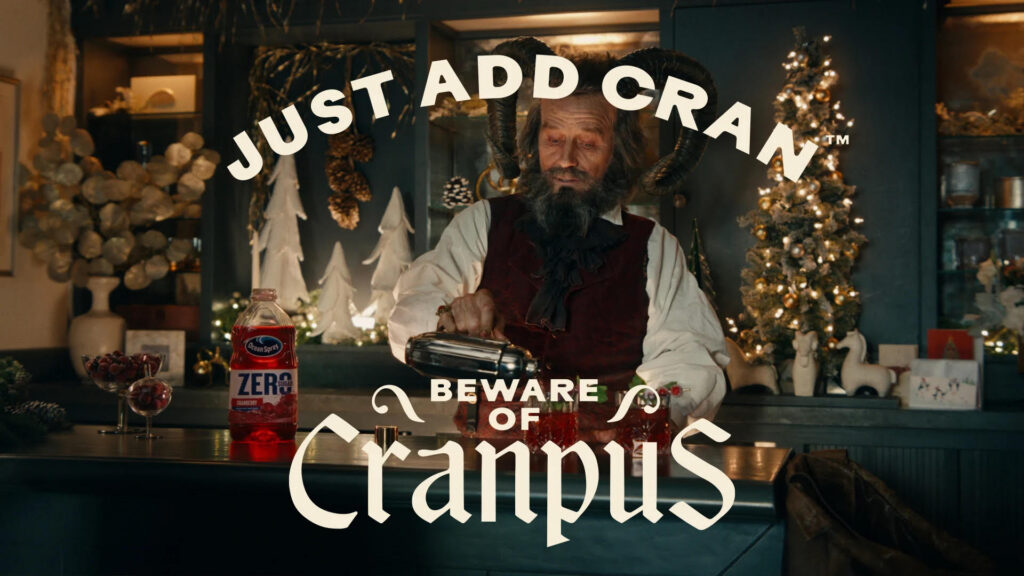
Photo courtesy of Ocean Spray Cranberries, Inc.
There’s a lot of conversation about AI transforming marketing. Where is it actually showing up in your day-to-day work, and where do you think the reality still lags the conversation?
AI is a great marketing accelerator, but it’s less great at having a gut feeling. Right now, its biggest impact for us is behind the scenes — helping teams move faster, clear the busywork, spark ideas, and keep up with the pace of an always-on world without running everyone into the ground. It cuts friction, clears the runway, and allows teams to operate with real agility.
Where the hype gets ahead of reality is creativity. AI can generate a lot of things. It can’t always tell you what’s actually interesting, culturally relevant, or worth paying attention to. The things that make brands relevant — creativity, community engagement, cultural intuition, knowing when to zig when everyone else zags — still come from people. We see AI as a catalyst, not a replacement. It gets us to the starting line faster, but the instinct, taste, and judgment that turn good ideas into great ones are still gloriously human.
Looking ahead a few years, what do you think will look genuinely different about brand leadership at a company like Ocean Spray, and what do you think stays the same no matter how much changes around it?
2030 marks 100 years of Ocean Spray, which is an incredible milestone. A lot will continue to change in how we lead the brand, especially as consumer attention and behaviors evolve. But what won’t change is the heart of who we are: a farmer-owned cooperative made up of roughly 700 family farmers. That’s our soul. It’s what keeps us grounded, gives us credibility, and makes us different in a world full of brands trying to manufacture authenticity.
Brand leadership going forward will require actions that are nimble enough to keep up with culture without getting swept away by it. Knowing when to jump on something, when to ignore it, and how to keep pushing the brand forward.
Platforms, technology, and consumer habits will change, but the goal won’t. Build something distinctive and purposeful. Give people a reason to care. Keep earning your place in their lives.
What’s a conventional wisdom about legacy brand-building that you think deserves more scrutiny, something your peers are still doing that you’ve stopped believing in?
One piece of conventional wisdom I’d challenge is the idea that brands can stay relevant by showing up with a few big splashy moments a year. Culture doesn’t work that way anymore. People don’t experience brands in campaigns. They experience them in feeds, comments, creators, conversations, and hundreds of small interactions over time.
That’s why we’re moving away from thinking about brand building as a series of events and more as a continuous relationship. The question isn’t just “What’s our next big campaign?” It’s “How are we showing up every day?”
For us, that means being intentional about the role we want Ocean Spray to play in people’s lives and reinforcing that consistently, whether it’s a major launch, a social post, a creator partnership, or a comment section interaction.
The biggest opportunity is in our owned channels, especially social, where we can build real familiarity and connection over time. Because today, relevance isn’t built in bursts. It’s built through consistency, participation, and showing up where culture is actually happening.
What’s the advice you find yourself giving most often to brand strategists who are earlier in their careers, the thing you wish someone had told you before you crossed over from the consulting side to running a brand yourself?
One piece of advice I always give: if every idea feels completely comfortable, you’re probably playing it too safe. Because the safest idea in the room is rarely the one people will remember.
Those moving brands forward aren’t the ones following the playbook. They’re the ones willing to rewrite it. The best work usually starts with the idea that makes everyone pause, laugh, or ask, “Can we really do that?” And, if it’s rooted in a real insight and a clear strategy, sometimes the best thing you can do is trust your gut and go for it.
About the Aivanta CMO Series
The Aivanta CMO Series is an editorial platform featuring in-depth conversations with senior marketing leaders about how the CMO role is evolving. Each piece is developed to surface real decisions, genuine trade-offs, and the kind of operating insight that rarely gets told at the right depth in trade coverage. New interviews are published on a rolling basis at aivanta.io/cmo-series.